
Cómpeta
A white village of the Axarquía clinging to the Sierra Almijara, among muscat vines, flower-filled streets and sea horizons.
White, high and alive
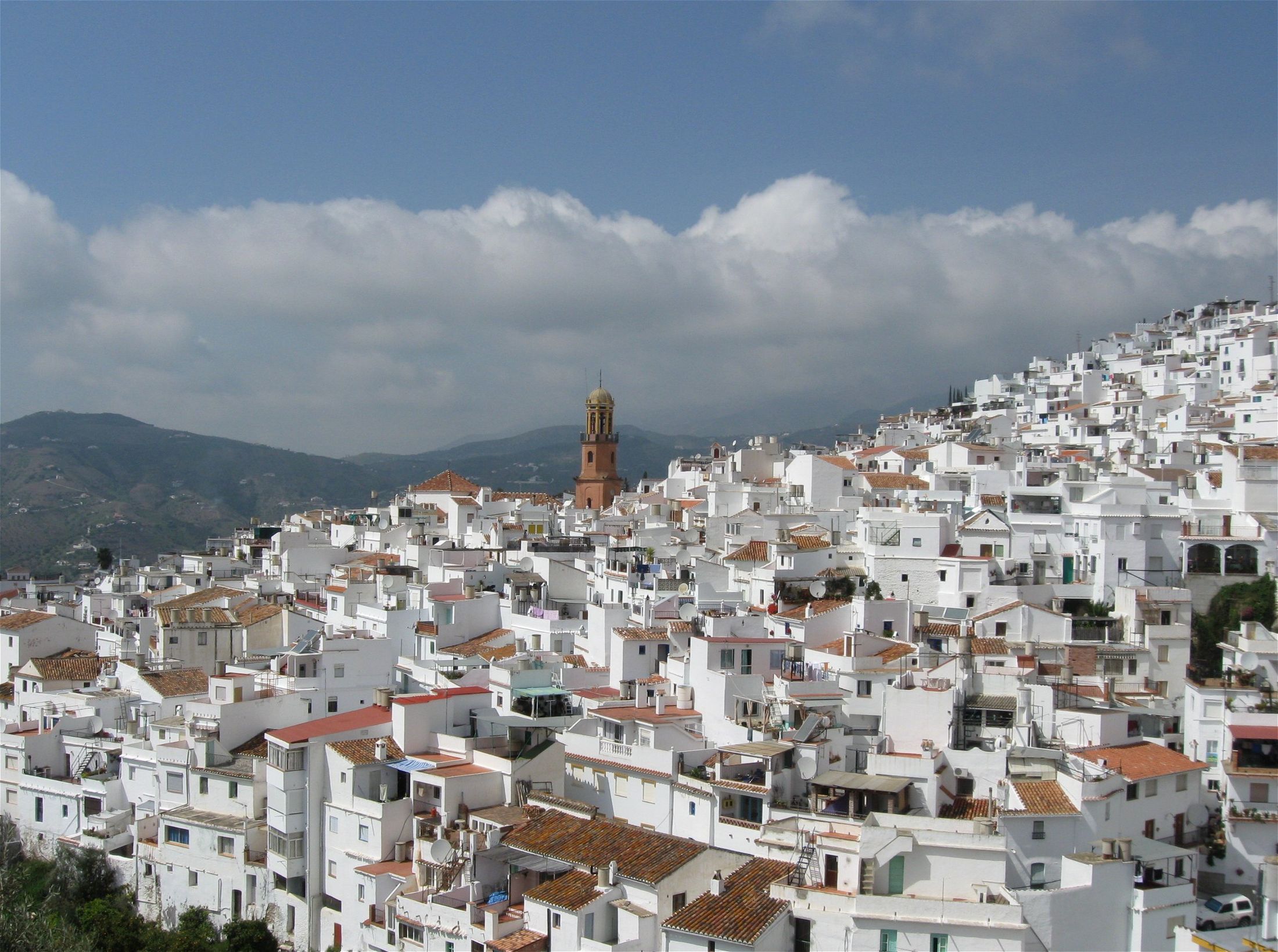
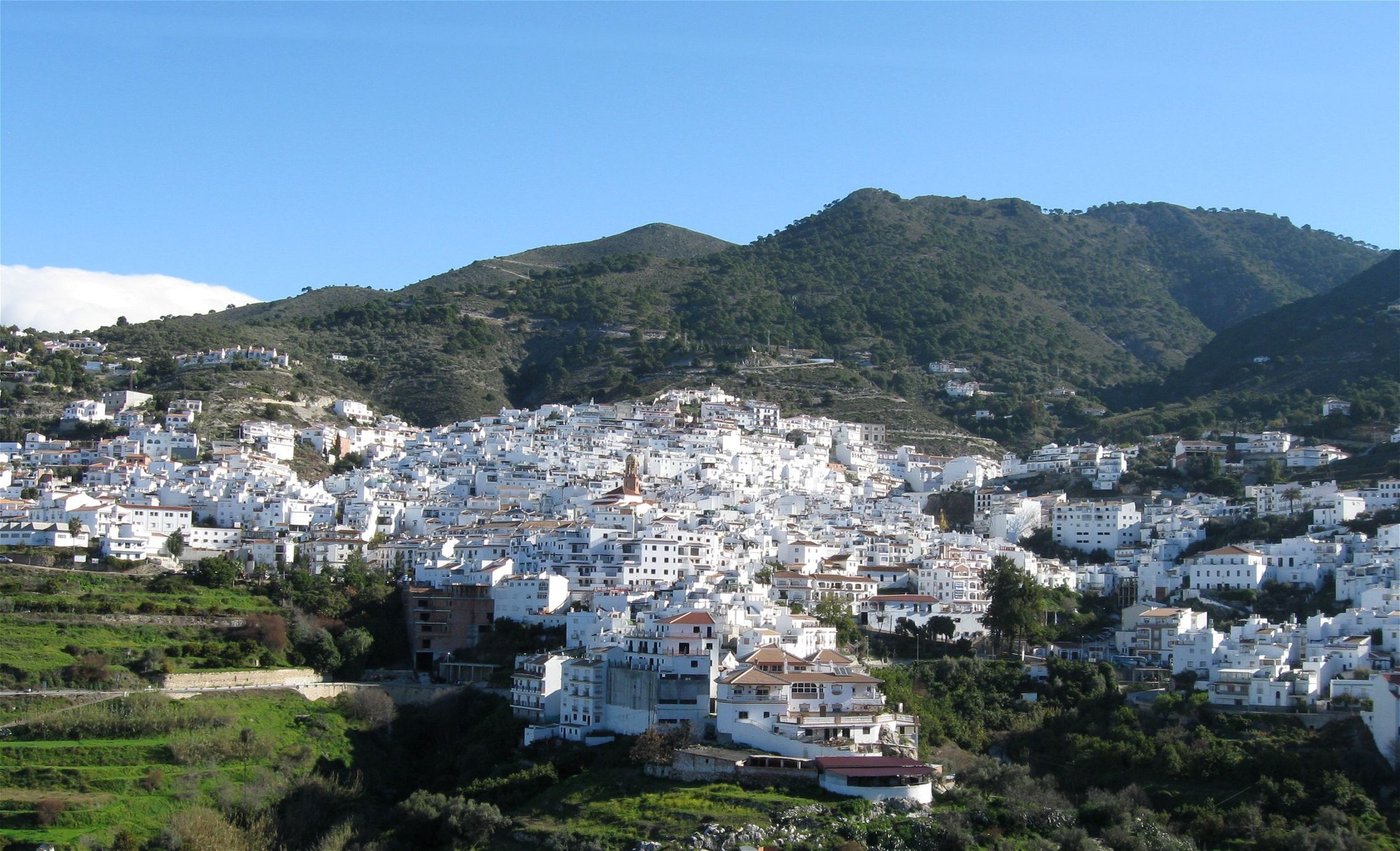
At 638 m, Cómpeta spreads across the foothills of the Sierra Almijara, in the Sierras de Tejeda, Almijara and Alhama Natural Park. The mountains rise just behind the houses, the Mediterranean shimmers in the distance, and muscat vines draw the hills between the two.
Far from the bustle of the big seaside resorts, the best plan is to get lost: whitewashed façades, little chapels, tiled street signs, shady terraces. In the evening everything converges on Plaza Almijara and its church tower, the landmark of the whole village.
- 638 mabove sea level
- 3,824residents (2025)
- 54 km²municipality
- 15 AugustNoche del Vino
From Moorish farmstead to wine village
- OriginsThe name is often linked to a Roman past, without written proof. The earliest writings point to the Moorish period, when Cómpeta was probably little more than a farmstead.
- 1487The Moorish villages of the Sierra de Bentomiz surrender to the Catholic Monarchs: the first written record of Cómpeta.
- 1569The Morisco rebellion is crushed and the village empties. Land begins to be redistributed to settlers in 1570.
- Christmas 1884The great Andalusian earthquake damages the church of Nuestra Señora de la Asunción.
- 1973The Noche del Vino tradition is born, when everyone is invited to drink the night's wine.
What to see in Cómpeta
Plaza Almijara
The village's living room, with its terraces at the foot of the church.
Church of La Asunción
Its ochre tower, around thirty metres tall, is the village landmark. It has been reworked after earthquakes over the years.
Plaza de la Vendimia
The grape-treading square on 15 August, with the Vendimiador monument by sculptor José Antonio Rivas.
Plaza de las Tradiciones
Eight ceramic murals by José Antonio Rivas tell the story of traditional trades.
San Antón and San Sebastián chapels
Two discreet chapels at either end of the village, worth the walk.
Museo de Artes y Costumbres
The local traditions museum, Calle Horno. Check opening times at the tourist office.
Casas Colgantes
The "hanging houses", a few steps from the centre.
Rincón de los Abuelos
One of those corners you find by getting lost, with its tiled plaques.
Cruz del Monte
The high point of the village, for the view and the May crosses.
Cómpeta at a glance
Tap a point to see its name. Filter sights, restaurants or services.
OpenStreetMap data: check opening times locally, some places may have changed.
Where to eat, our favourites
The ones we actually go to, from morning tostada to evening pizza.
El Recreo
Calle Parras 27. For breakfast (we love the media tostada con tomate y aceite) and any other meal of the day. In summer, order a vino tinto as an aperitif.
Venta de Palma
The cafeteria near the apartment, where we like to have breakfast.
Taberna Hierbabuena
Avenida de la Constitución, in the centre. We often walk there.
La Piña, in Árchez
For pizza fans: the best around. Phone first, as there are days when they don't make any.
Mum
For a change, a good Indian restaurant.
Also in the village
Plaza Almijara
The square is shared by Casa Paco, Perico and La Cantina: the easiest place to sit down and watch village life.
El Pilón
Mediterranean cooking in the upper part of the centre, often named as the village's most popular restaurant. Book: +34 952 55 35 12.
El Pámpano
Avenida de Nerja, at the edge of the centre.
Plaza del Carmen
Café Bar David and Café Bar El Chico, for a simple break among locals.
Siddhartha on the Rock
Calle del Aguacate, for a change of scene.
El Picinin da Legnago
Pizza and pasta, Avenida de Canillas.
These other places come from guides and OpenStreetMap, and we have not tried them all. Check opening times.
Wine, raisins and the Noche del Vino
Cómpeta owes its reputation to its sweet and dry wines and its raisins. Around the village you can still see the paseros, sun-drying beds for the grapes. Try a muscat drawn from the barrel.
The typical dishes are migas, potaje de hinojos and calabaza frita.
Every 15 August the Noche del Vino brings the village together: grape treading in Plaza de la Vendimia, migas, then fandangos in the evening on Plaza Almijara.
Festivals of the year
20 January
Romería and festival of San Sebastián.
3 May
Día de las Cruces, with the May crosses.
24 June
San Juan festival.
Late July
Feria de San Sebastián, four days of celebrations.
15 August
Noche del Vino, the big event of the year.
Confirm dates at the tourist office, as they can vary from year to year.
The Andalusian way of life
Here, a simple "hola" can easily turn into a few minutes of conversation. People meet for a coffee or a meal, often unplanned, and terraces, squares and little bars are genuine meeting places.
Meals are later and the day feels less rushed. Take your time, enjoy the evening, learn a few Spanish words, and don't try to see everything.